
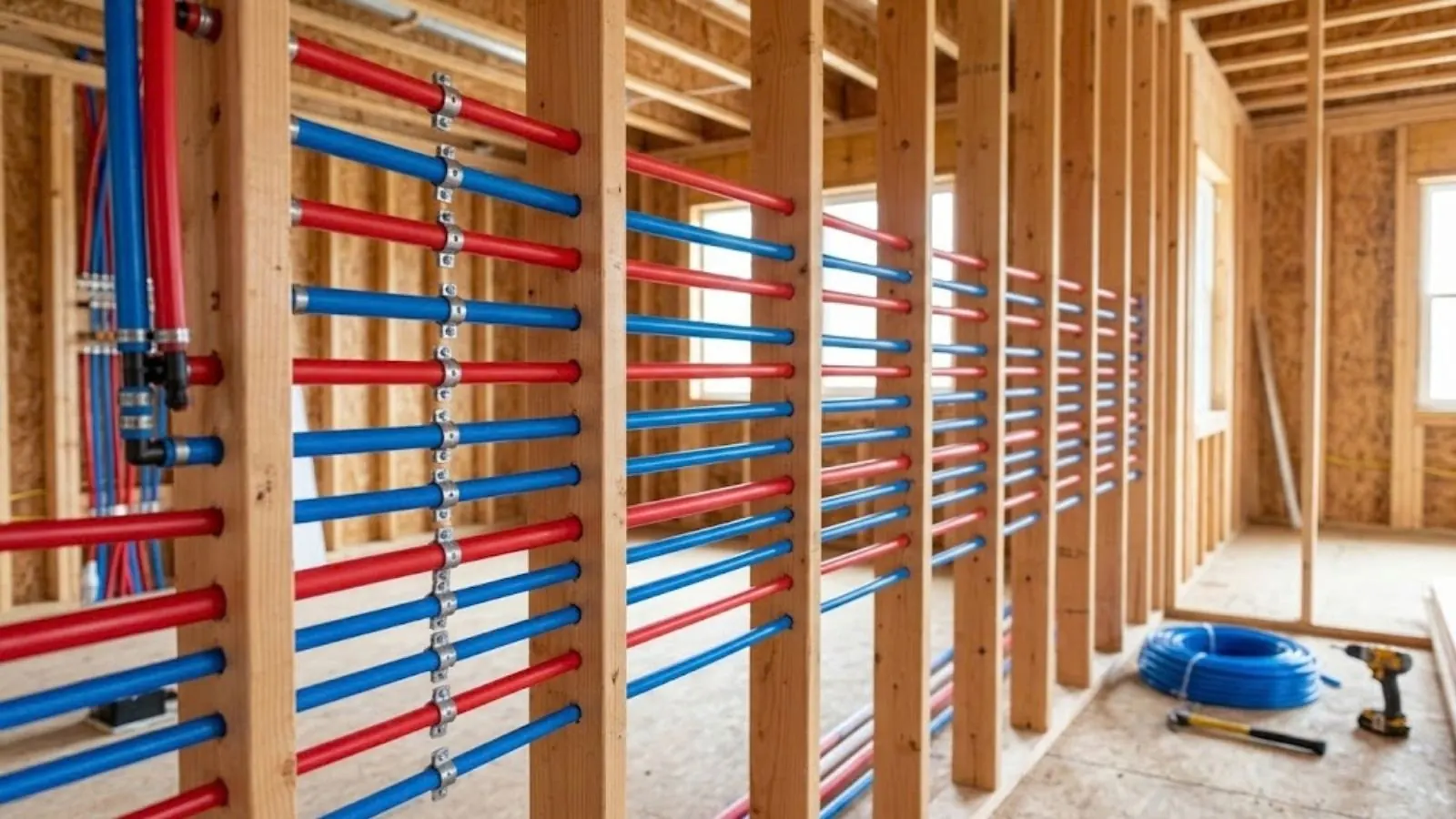
Repiping in San Juan Capistrano, CA
Repiping replaces the supply pipes that carry water through a home. This page explains when it makes sense, what the material choices mean, and what the job involves.
Repiping: the 24/7 line is answered at every hour.
What repiping means for a home
Repiping in San Juan Capistrano, CA means replacing the water supply lines inside a house, from the main shutoff to each fixture, with new pipe. It does not usually include the drain and sewer side. It is planned work, so you can compare options and pick a date, and a short note applies: if a pipe is actively bursting, call the 24/7 line at (949) 325-3122, since burst pipe repair is handled as an emergency.
The decision is rarely made over one leak. It comes from a pattern: repeated repairs, discolored water, weak flow, or pipe that has aged out of its useful life. A repipe is rebuilt to the California Plumbing Code (UPC-based), which is a good reason to hire a licensed contractor rather than a handyman.
Signs the pipes are wearing out
- Water runs brown or rusty when it sits overnight.
- Showers have lost pressure but the street supply is fine.
- We keep fixing pinhole leaks in different places.
- Green stains or crusty deposits show on exposed pipe joints.
- Hot water takes forever to arrive and then sputters.
- A plumber told us the pipe is galvanized steel.
- The walls have been opened twice already for leaks.
One of these signs alone may have a cheaper answer. Three or four together usually mean the pipes are failing as a system, and patching each leak is only buying time.
Galvanized pipe and why it gets replaced
Galvanized steel pipe is coated in zinc that wears off. Once it does, the steel rusts from the inside, and the bore narrows until flow drops. A pipe can look fine outside and be nearly closed inside.
We do not guess what is behind your walls. A plumber can look at accessible sections, check flow at fixtures, and tell you whether the visible pipe is galvanized, copper or plastic. Pipe material depends on the building, not the street or the ZIP code.
Copper or PEX: the honest trade-offs
| Point | Copper | PEX |
|---|---|---|
| Lifespan | Long, when water chemistry is kind | Long, but a newer material with a shorter track record. |
| Installation | Soldered joints, more labor | Flexible tubing, fewer joints, quicker to run. |
| Wall damage | More openings needed | Often fewer openings. |
| Sun and exposure | Unaffected by sunlight | Must be shielded from sunlight. |
| Water chemistry | Can pit under aggressive water | Does not corrode, can be affected by some chemicals. |
| Cost | Material is usually pricier | Usually less to buy and install. |
Neither is perfect. Copper has decades of proven service but costs more and takes longer to install. PEX is cheaper and flexible, but needs protection from sun and some chemicals. A plumber who tells you one is always better is selling, not advising.
Ready to compare copper and PEX for your house? Call (949) 325-3122 and we will go through it.
Hard water and what it does to pipes and fixtures
SMWD's 2026 report for San Juan Capistrano gives an average about 12 grains per gallon of hardness for 2025, with a range from about 5.2 to 17 depending on where you live in the system. That is hard water. It leaves scale in water heaters, on faucet aerators and inside valves, whatever pipe you choose.
For a repipe, that means new valves and fixture connections will scale over time, so quality shutoff valves and a yearly flush of the water heater are sensible. If scale is a recurring complaint, a softener may be worth a look, and the page on water softeners and filters explains the options. To see the number for your own street, read the district's water quality report or ask SMWD Customer Care.
How a whole-house repipe goes
- STEP 01
Walk-through.
The plumber maps fixtures, the water heater, the main shutoff and where walls or crawlspaces allow access.
- STEP 02
Plan and price.
You hear the pipe material, the routing, and a clear price before work starts.
- STEP 03
Water off, new lines in.
Old supply is cut out and new pipe is run through the framing. The water is off for part of each work day.
- STEP 04
Pressure test.
The new system is filled and pressure tested before any wall is closed.
- STEP 05
Patch and clean-up.
Access holes are patched to drywall stage. Paint and finishes are usually a separate trade.
A whole house repipe is measured in days, not hours, and the length depends on the size of the home and how easy the walls are to reach. Permit and inspection needs differ from job to job, so check with the city's building department before the date is set.
What shapes the price of repiping
| Factor | Why it matters |
|---|---|
| Home size and number of fixtures | More fixtures mean more pipe and more connections. |
| Pipe material | Copper and PEX differ in material and labor. |
| Wall and ceiling access | Tight framing means more patching. |
| Number of floors | Vertical runs add time. |
| Permits and inspections | Local requirements vary and should be checked. |
Insurance tends to pay for damage from a sudden break, not for replacing pipe that simply wore out. Your insurer can tell you which category your loss falls into. Want your real number? Call (949) 325-3122.
Before you decide
If a hidden leak is the main worry, start with leak finding, since a single repair may solve it. Slab leaks may have their own answers, covered under work on leaks under a concrete floor. And when you also plan new fixtures, read about adding new fixtures and lines so the two jobs are planned together. Homes in ZIP codes 92675 and 92693 are covered, and owners in Rancho Santa Margarita to the north-northeast can ask about scheduling too.
Repiping questions, answered
One leak in an otherwise sound system is a repair. Repeated leaks, rusty water and weak flow in several fixtures suggest the pipe is failing as a whole. A plumber can look at accessible sections and test flow before recommending anything.
PEX is widely used for drinking water supply lines. Ask your plumber which fittings they use and how exposed runs will be shielded from sunlight, and confirm local approval with the building department.
If the cause is narrowed or corroded pipe, yes. If the cause is a partly closed valve or a failing regulator, it will not. We check those first.
Often yes, though the water is off during work hours. Plan for limited bathroom and kitchen use and ask about temporary arrangements for the day.
Scale forms in heaters and fixtures whichever material you pick. Water chemistry can matter for copper more than for PEX, so ask the district about your water and discuss it with the plumber.
The owner does. Tenants should report rust, leaks or low flow to the landlord in writing.
Shut off the main valve and call the 24/7 line at (949) 325-3122. A burst is handled as an emergency, and the longer-term repipe can be planned afterward.
Need repiping in San Juan Capistrano? Call the 24/7 line.