
Emergency Leak Detection in San Juan Capistrano, CA
Water is leaving your pipes somewhere you cannot see. Emergency leak detection in San Juan Capistrano, CA starts with one call to the 24/7 line, (949) 325-3122, so only a small patch ever gets opened.
Leak Detection: the 24/7 line is answered at every hour.
A leak you can't see is running right now
Hidden water loss is an emergency even when nothing is dripping, and the 24/7 line is (949) 325-3122. Leak detection in San Juan Capistrano, CA means pinpointing the exact spot where pressurized water escapes a pipe, so a repair starts with a small opening instead of a guess. While you wait, close the main valve and keep everyone away from wet areas near outlets.
If you suspect a hidden leak right now.
- Close the main shutoff valve. It is usually on the street-side wall, in the garage, or in a utility closet.
- Switch off the water heater at the breaker or set the gas control to pilot, in case the tank drains while the water is off.
- Stay out of any room with a sagging ceiling or water near light fixtures and outlets, and turn off that room's breaker only if you can reach the panel dry.
- Photograph the meter dial, the stain and the clock time. Your plumber and your insurer will both ask for them.
- Lift rugs, boxes and electronics off damp floors and open a window so the air moves.
Then call and describe what you saw: a stain, a creeping dial, a warm patch of floor, a soggy strip of lawn. Same-day appointments are available when the schedule allows, and the line stays open after hours, on weekends and on holidays. If water is spraying instead of seeping, that is a burst pipe, and if the floor itself is warm, read about slab leaks as well.
How a leak gets found without tearing out walls
- STEP 01
Sort inside from outside.
With every fixture off, the plumber watches the meter and then closes the main to see which side of the house the loss is on.
- STEP 02
Pressure test each branch.
Sections of supply line are capped and watched on a gauge. A branch that cannot hold pressure is where the leak lives.
- STEP 03
Listen and scan.
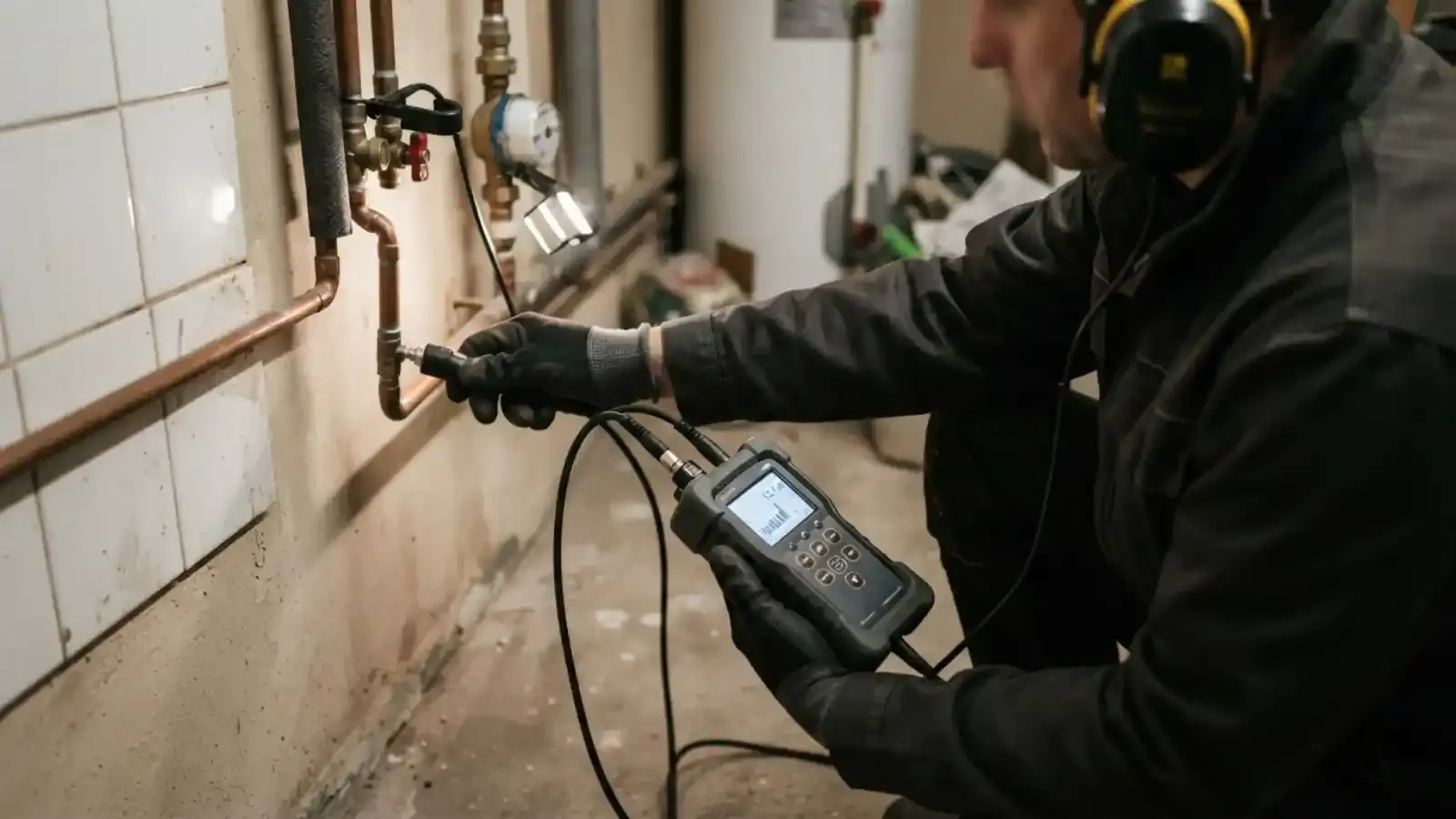
A ground microphone picks up the hiss of a pressurized pipe, and a thermal camera shows warm lines or cold, wet drywall behind paint.
- STEP 04
Mark it and explain it.
You get the spot marked, the likely cause, and the repair options, with a clear price before work starts.
The meter keeps turning with every tap off
You can run the first test yourself. Shut off every faucet and appliance, including the ice maker, then watch the small dial or triangle on the water meter. If it keeps moving, water is leaving the pipes somewhere. Drop a little food coloring in each toilet tank first, because a silent flapper leak looks exactly like a pipe leak on the meter.
A bill that jumps with no change in habits is the other clue. Ask SMWD Customer Care whether it can show your usage by period, since a slow climb points to a growing seep and a sudden step points to a break.
- The meter dial creeps even when nobody is home.
- Last month's bill is far higher and nothing changed in the house.
- I hear a faint hiss near the water heater or under a sink.
- One patch of floor feels warm or damp underfoot.
- The lawn near the street is soggy while the rest is dry.
- Pressure dropped in the whole house at once.
Ceiling stains, damp walls and wet attic insulation
A brown ring on a ceiling lies about location. Water runs along joists and pipes and drops several feet from where it escaped, so the stain marks the end of the trail, not the start. If it grows when a shower runs, suspect a supply or drain line. If it grows only after rain, it is a roof problem, and with about 13.6 inches of rain a year here, noting the weather saves a wasted visit.
Inside walls, a moisture meter and thermal camera draw the wet zone before anyone cuts, and the opening is often no bigger than a hand. In attics, the culprit is often not a pipe at all but an air conditioner's condensate line or a water heater relief line. In historic wood buildings like those along Los Rios Street, years of added and altered plumbing mean tracing the line first, then cutting.
If a ceiling is bulging with water, put a bucket below and pierce the lowest point with a screwdriver so it drains in a controlled way. Do this only with the room's power off.
Meter still turning? Call (949) 325-3122 and we will track the loss to its source.
Under the house and in the crawlspace
Crawlspace leaks announce themselves by smell and sound before sight. A musty odor, a soft or bouncy patch of floor, or running water heard in the quiet of night all point downward. The plumber goes under with a moisture meter and a light, and follows each supply and drain line, including the water heater's drain.
Homes on a concrete slab have no crawlspace, so those leaks are traced by sound and heat instead.
Buried pipe and the line from the street
The service line runs from the meter to the house, usually under lawn or hardscape. When it leaks, you may see a green, boggy strip, hear water running that matches no fixture, or find the meter spinning with the main closed. That last sign is decisive: if the dial turns after you close the main at the house, the leak is in the buried stretch.
Finding it takes acoustic correlation, where sensors on two points triangulate the noise, plus a tracer if needed. Call 811 before any digging. In general the pipe on the house side of the meter is the owner's responsibility, but confirm with the district that serves your address, and never touch fittings on the street side of the meter.
Sprinklers, pools and the meter box
Irrigation leaks hide in valve boxes and under mulch. A zone that keeps weeping after the timer ends, or a station that moves the meter more than its heads should, points to a broken lateral underground. We find where the line fails and tell you plainly if the fix belongs to your landscaper.
For a pool or spa, try the bucket test: float a bucket on the step with its water level marked to match the pool, and compare after a day. Evaporation drops both equally in this mild climate, while a leak drops the pool more. We pressure test the supply and return plumbing, though cracks in the shell belong to a pool specialist.
Water standing in the meter box lid usually means a fitting at the meter or shutoff is seeping.
Low pressure with no clear cause
If pressure is weak at one fixture only, scale is the likely cause. SMWD's 2025 report puts the average hardness at 12 grains per gallon, which is hard water, so aerators and showerheads clog. Unscrew and soak them first. If the whole house is weak and the meter moves, a leak upstream is stealing flow, and that is when to call.
What a leak search costs and who may pay
| Factor | Why it matters |
|---|---|
| Where it is suspected | One fixture is quick, a whole system or yard takes longer. |
| Access | Crawlspaces, attic hatches and finished walls change the time on site. |
| Method needed | Meter and pressure tests are simpler than acoustic or thermal tracing. |
| Depth and surface | A line under concrete or landscaping is harder to confirm than one in a wall. |
| The repair after | Detection ends at a mark, and a short patch differs from a long pipe run. |
A sudden, accidental release of water is what most home policies respond to, while wear is usually excluded, and tear-out costs can be treated differently. Ask your insurer before work starts and keep the photos. Want your real number? Call (949) 325-3122.
Dispatch runs from our Del Obispo Street address across ZIP codes 92675 and 92693 and on to neighbors like San Clemente. If the search shows a line past patching, new runs are plumbing installation work.
Leak Detection questions, answered
Yes. The 24/7 line, (949) 325-3122, is answered through the night, on weekends and on holidays. Same-day appointments are available when the schedule allows, and no arrival time is promised over the phone.
Turn everything off and watch the meter, then close the main valve at the house. If the dial stops, the loss is inside. If it keeps turning, the leak is on the buried stretch between the meter and the house.
Usually only a small access hole, placed after the leak has been pinpointed. Patching and repainting the drywall afterward is a separate job from the plumbing.
Check the irrigation timer, a pool auto-fill, a running toilet and any change in how many people are home. An intermittent leak that only runs under pressure at night can also slip past a daytime test, so a longer watch may help.
Tell the dispatcher which unit and who can let the plumber in. Leak work often needs access to the unit above or below, so a heads-up to residents shortens the visit.
Need leak detection in San Juan Capistrano? Call the 24/7 line.