
What Is a Plumbing Snake? San Juan Capistrano, CA Guide
A plumbing snake is a long, flexible steel cable that cuts through blockages in a drain line. This guide covers the machines plumbers use, what they clear, and what to do when the cable meets something it cannot beat.
Water already escaping? Skip the reading and call.
What a drain snake is, and what it does
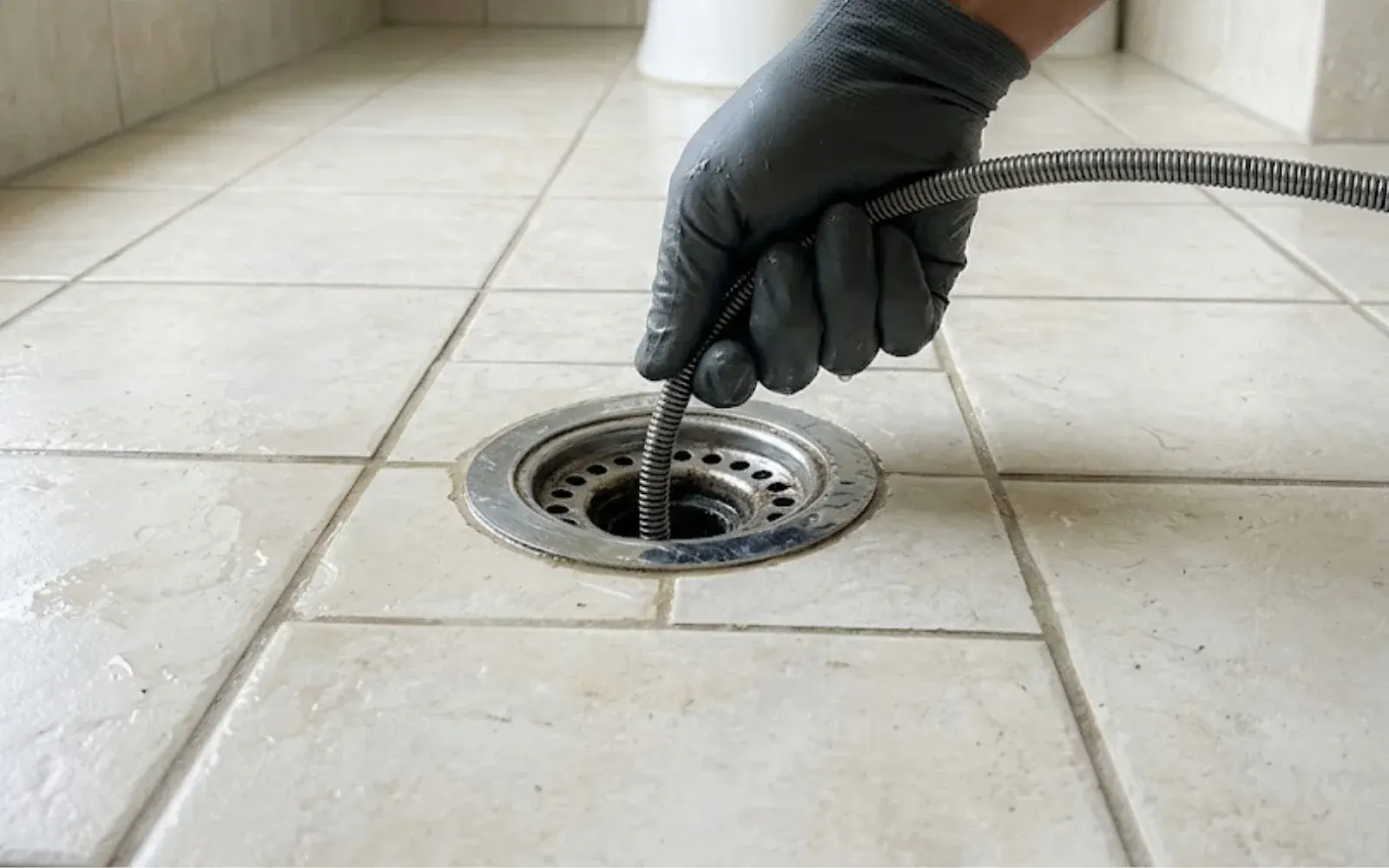
A plumbing snake, also called a drain cable, is a coiled steel line that a machine spins inside a pipe. A cutter head on the end chews through grease, paper, scale and roots. The spinning also lets the cable follow bends instead of jamming at them.
That makes it different from a plunger, which pushes pressure, and from a hose, which flushes with water. A snake opens a path by cutting. It is best at making a hole in a blockage, so water can flow again.
Cable sizes and machines, from light to heavy
Cables come in widths matched to pipe size. Thin cables fit small branch drains. Thick cables handle larger lines, and they carry more cutting power through longer runs.
| Setup | Where it works | Limits |
|---|---|---|
| Hand-crank cable | Short runs from a nearby access point | Little power, cannot go far. |
| Small drum machine | Branch drains such as laundry and bathroom lines | Struggles with thick roots or long distances. |
| Sectional machine | Main drain lines through a cleanout | Needs space and skill, can bind in bends. |
| Large drum machine with cutters | Long main line runs with roots | Heavy gear, risk to old pipe if used carelessly. |
Sectional machines use cable in joined lengths, which a trained operator can feed one section at a time. Drum machines keep the cable on a spool. Both rely on cutters swapped to match the blockage, such as a spade for soft debris or a saw-toothed head for roots.
Roots: the clog a snake only half solves
Tree roots find tiny cracks and joints in a sewer line, then grow inside it in search of moisture. A cutter head can slice through the strands and restore flow for a time. The roots grow back from the cracks they entered, so the clog returns.
How fast depends on the tree, the pipe condition, and how much water is in the soil. Some lines stay clear for a year or more, and others clog again within months. If roots return quickly, ask for a camera view of the line. A snake treats the symptom, while a repair addresses the opening.
What a snake can and cannot clear
- Grease, soap scum and paper buildup in branch lines: usually clears well.
- Hair and debris in a main line: often clears with the right cutter.
- Light root intrusion: cuts through, but may return.
- Heavy grease coating along the whole pipe wall: only opens a hole, does not scrape the walls clean.
- Solid objects such as a toy or a broken pipe piece: cable can push them deeper or snag.
- Collapsed, offset or cracked pipe: cable cannot fix a structural fault.
The key limit is that a snake bores a channel. It does not scrub the entire pipe wall. Grease and scale remain stuck along the sides, and they build again. That is why drains that clear and then clog within weeks usually need more than a second pass with the same tool.
San Juan Capistrano note: finding your cleanout and your sewer owner
Who owns and maintains the sewer line between your house and the main differs by address. Confirm with the district that serves your address before assuming the line is yours. A blockage at the main, rather than your lateral, is a different call than a blockage inside your property.
Our crews dispatch from Del Obispo Street in San Juan Capistrano, with I-5 interchanges at Camino Capistrano, Ortega Highway and Junipero Serra Road close by. That means a camera and a cable machine can reach most of the city by road without a long trip. We still give no arrival time, but we do book same-day appointments when we can.
Source: City road and interchange facts, business address
Repeat backups usually mean the first fix missed something. Call us and we will look at the line.
Signs the cable has met a problem
Experienced operators feel the difference between soft debris, roots and a hard stop through the cable. Soft debris gives way. Roots grab and pull. A hard stop with no give can mean a collapsed section, a broken joint or an offset connection.
A cable that comes back clean, with no debris and no scratches, tells you the blockage is further away. A cable that comes back with bits of clay or dark pipe fragments tells you the line may be damaged. In either case, more cutting is the wrong answer. Pushing harder can twist the cable or tear a weak section of pipe wider.
Next steps when a snake fails
- STEP 01
Run a camera through the line.
A small waterproof camera on a flexible rod shows exactly what is blocking the flow and whether the pipe is intact.
- STEP 02
Choose the right cleaning method.
Roots, grease or scale on the walls often call for high-pressure water. Our hydro jetting service scours the pipe wall rather than just opening a hole.
- STEP 03
Repair what the camera finds.
Cracks, sags or breaks need repair or replacement. Cleaning alone only delays the next backup.
- STEP 04
Set a maintenance plan.
Lines with roots often benefit from regular cleaning on a schedule based on how fast they clog.
Whichever route fits, a plumber can explain the options in plain language. Call (949) 325-3122 and describe the signs: which drains are slow, what the cable did, and when the last backup happened. For routine blockages, our drain cleaning service is the usual starting point.
Should you rent a snake yourself?
A hand-crank cable is cheap and sensible for a laundry sink or a bathroom branch you can reach. Rented power machines are different. They carry real risk if the cable binds, and an old pipe can crack from the force.
If the cleanout is outside, the line is long, or the home has had repeated backups, you are better off with a trained operator. They know how to pace the cable, choose a cutter and stop before damage. A renter who keeps pushing may turn a clog into a repair.
Neighbors in Mission Viejo and Dana Point ask the same question, and the answer holds there too. If the first pass clears the line, watch it for a few weeks. If the drains slow again, call (949) 325-3122 before the next backup arrives at a bad hour.
What affects the price of snaking a line
Price tracks access, length and complexity. A clear cleanout makes the job faster than a line you must open at the roof vent. Roots, grease buildup, the number of passes and any camera inspection also matter. Pricing is explained before work starts, and the factors above are the ones to ask about.
Questions readers ask about this topic
The words overlap, and a fixture-side auger is a close cousin. In this guide, snake means the powered cable machine plumbers run through drain lines. A hand tool for a toilet is a different job.
It can, if the operator pushes through a bind or the pipe is already fragile. Old clay or cracked pipe is more at risk. A good operator reads the resistance and stops, and a camera can confirm what is happening.
It varies with what caused the clog. Hair and paper may not return for a long time. Roots and grease often come back, since the source is still there. Ask the plumber what they found.
A stuck cable usually means roots, an offset joint, or a broken piece of pipe. Do not keep forcing it. A camera view tells you whether to try jetting or repair.
A cleanout gives the easiest access, but it is not the only route. Without one, a plumber may use a vent, a toilet or another opening. Call (949) 325-3122 and ask what applies to your home.
Done reading and still have water where it should not be? Call now.