
Toilet Flush Valve Repair for San Juan Capistrano, CA Homes
A toilet that runs, hisses or flushes weakly usually has a worn flapper, flush valve or fill valve inside the tank. Here is how to tell them apart and what to fix yourself.
Water already escaping? Skip the reading and call.
Which part is failing
A toilet tank has three working parts that get mixed up. The flapper is the rubber seal that lifts when you flush. The flush valve is the tube and seat it sits on, which also holds the overflow pipe. The fill valve refills the tank. Most running toilets are a worn flapper, a pitted flush valve seat, or a fill valve that never shuts off cleanly.
Before opening the tank, lift the lid and look. Is water running over the top of the overflow tube? Does the chain have so much slack it sits under the flapper, or so little it holds the flapper open? Does the fill valve hiss while the level is already high? Thirty seconds of looking often names the culprit.
Start with the cheapest part and work toward the bigger job. If you get stuck, the toilet repair team can sort it out on a same-day appointment when available, and you can reach the 24/7 line at (949) 325-3122 if water is spilling onto the floor.
Match the symptom to the part
| What you see or hear | Likely part | First move |
|---|---|---|
| Tank refills by itself every so often | Flapper or flush valve seat | Dye test the tank. |
| Constant hiss or trickle after the flush | Fill valve | Check float height and fill valve seals. |
| Water runs into the overflow tube | Fill valve set too high | Lower the water level. |
| Weak or partial flush | Flapper closing early, or chain too tight | Adjust the chain slack. |
| Water leaks at the tank bolts or base of the tank | Flush valve gasket | Replace the flush valve seal. |
Add a few drops of food coloring to the tank and wait a quarter hour without flushing. If color shows up in the bowl, the seal between flapper and seat is leaking. That one test settles most of the debate.
Listening helps too. A steady hiss points at the fill valve. A faint trickle sound with a slowly dropping tank points at the flapper. A gurgle at the bowl after a flush can mean the flapper is leaking while the fill valve works hard to keep up.
Replacing a flapper in ten minutes
- STEP 01
Shut off and drain.
Turn the supply stop under the tank clockwise until it stops, flush, and hold the handle to empty most of the water.
- STEP 02
Unclip the old flapper.
Slide the flapper's ears off the pegs on the overflow tube and unhook the chain from the flush lever.
- STEP 03
Wipe the seat.
Rub the ring the flapper sits on with a rag or soft pad. Mineral crust here is a common cause of slow leaks, and cleaning can fix the problem.
- STEP 04
Fit the new flapper.
Match the style to your flush valve. Clip it on, attach the chain with a little slack, then turn the water back on and watch for a clean seal.
Buy the flapper that fits your tank, not just the one on the shelf. Valve sizes differ, and a wrong size either leaks or closes too fast.
San Juan Capistrano note: hard water and flapper seats
Total hardness in the Santa Margarita Water District system averaged 210 mg/L in 2025, which is hard water. Minerals crust on the flapper seat and clog the small ports of a fill valve, so a flapper that fails in a few seasons here is not unusual. Wiping the seat each time you replace a flapper is a cheap habit that pays off.
Hardness ranged from 89 to 290 mg/L across the system, and it depends on where you live. Two neighbors may see different wear. If your parts crust up quickly, ask a plumber about your tap's hardness and whether treatment makes sense.
Source: Santa Margarita Water District quality report for 2025
Tried the flapper and it still runs? A plumber can find the real cause on a same-day appointment when available.
When the flush valve itself needs replacing
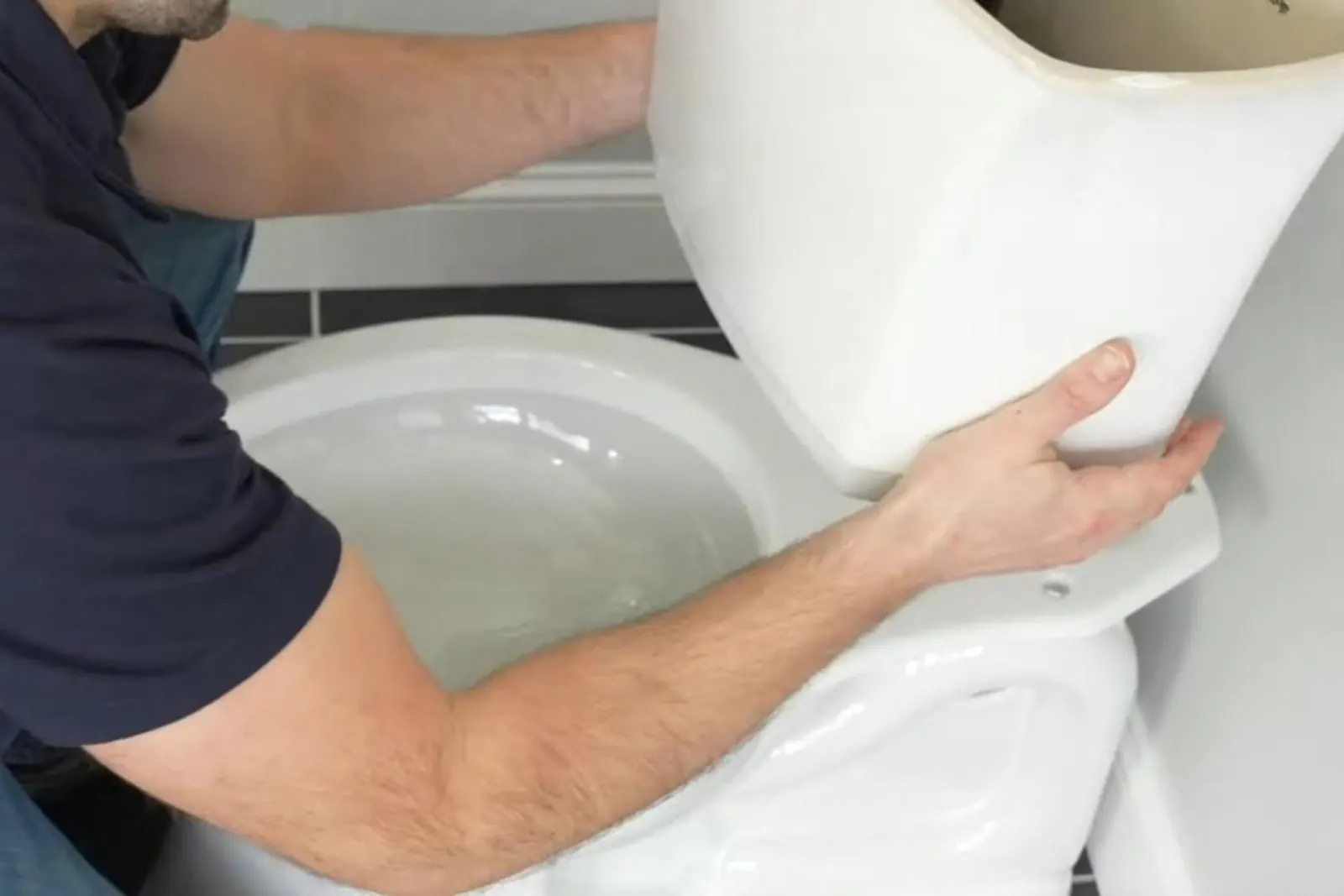
If the seat is pitted or cracked, or the base gasket leaks, a new flapper will not hold. The fix is a full flush valve swap. Shut off the water, empty the tank, disconnect the supply line, and unbolt the tank from the bowl if the design requires it.
Then unscrew the large nut under the tank, pull the old valve, drop in the new one with its gasket, and tighten evenly by hand plus a small turn. Reinstall the tank on a new tank-to-bowl seal. Overtightening cracks porcelain, so go gently.
This job is doable for a patient owner, but it is more finicky than it sounds. Many people find that the plastic nuts and the tank bolts are corroded and stubborn.
Check the shutoff first
Before any tank work, turn the supply stop and flush to confirm it really stops the water. A stop valve that will not close fully means you cannot safely work on the tank. Call a plumber to replace the stop, and do not force it, because an old stem can snap.
Fill valve problems and a quick adjustment
The fill valve shuts off when a float rises to a set level. If water keeps running, check whether the float touches the tank wall, whether the level sits above the overflow tube, and whether grit is blocking the seal. Many fill valves can be flushed by lifting the cap and letting a burst of water rinse the seat.
If cleaning and adjusting do not stop the hiss, replace the valve. Universal fill valves are inexpensive and fit most tanks. Faucet-style supply stops and braided lines are shared with faucet repair work, so a worn stop valve can be replaced at the same visit.
Also check the braided supply line under the tank. Look for rust at the nut, drips on the line, or a kink. Replacing the line is quick, and a call to (949) 325-3122 will tell you whether the stop valve should be swapped with it.
Checklist before you call
- You ran the dye test and the color reached the bowl.
- You replaced the flapper and the leak is still there.
- The tank is cracked or leaks at the bolts after reseating.
- The shutoff valve will not close all the way.
- Water is on the floor and you cannot stop it.
Any of those is a good reason to hand the job off. If a supply line is spraying, close the stop under the tank, or the main valve if that fails, then call (949) 325-3122. Neighbors in San Clemente and Laguna Niguel run into the same tank parts, since toilets use standard designs, and cost factors there are the same: parts, access, corroded hardware and whether the fixture itself needs replacing.
Questions readers ask about this topic
That is called phantom flushing. Water is slowly leaking past the flapper or seat, the level drops, and the fill valve tops it up. Do the dye test and clean or replace the flapper.
There is no fixed life. Rubber softens with age and chemicals, and hard water crust shortens it. Many owners replace one when a leak shows up.
It is better not to. Tank cleaners with chlorine can soften and degrade rubber parts, shortening flapper life.
Yes, because water flows constantly. If your bill jumped and the toilet is running, fixing it is a sensible first step. A hidden fixture leak can look the same as other leaks.
Not by themselves. Spots and crust show mineral content. Failure shows up as running, hissing or weak flushes. Still, crust on the seat is a common cause of leaks.
Done reading and still have water where it should not be? Call now.