
Sewer Line Clog Repair in San Juan Capistrano, CA Homes
Several drains slow at once usually means a main sewer line clog, not a bad fixture. Here is how to tell, what to do while it backs up, and when clearing the line is not enough in San Juan Capistrano.
Water already escaping? Skip the reading and call.
Main line clog or one stubborn drain? Start with the lowest fixture
If only one sink or tub is slow, the clog is probably in that fixture's own pipe. If several drains slow down together, or a toilet gurgles when the washer drains, the blockage is likely in the main sewer line. The lowest fixture in the house, often a floor drain, shower or tub on the ground level, backs up first because it is the weakest point.
That one test separates a quick fixture job from a sewer line problem. The sections below help you confirm which one you have, find your cleanout, and decide between clearing the line and repairing it.
| What you notice | Likely location | First step |
|---|---|---|
| One sink drains slowly | That fixture's trap or branch | Plunge or clear the trap. |
| Toilet and tub both slow | Branch line shared by the bathroom | Try the plunger, then call if both stay slow. |
| Lowest drain backs up when others run | Main sewer line | Stop using water, find the cleanout. |
| Gurgling in several drains | Partial blockage or poor venting | Watch for the pattern, then call. |
| Sewage in a floor drain or shower | Main line fully blocked | Stop all water use and call right away. |
Find your cleanout before you do anything else
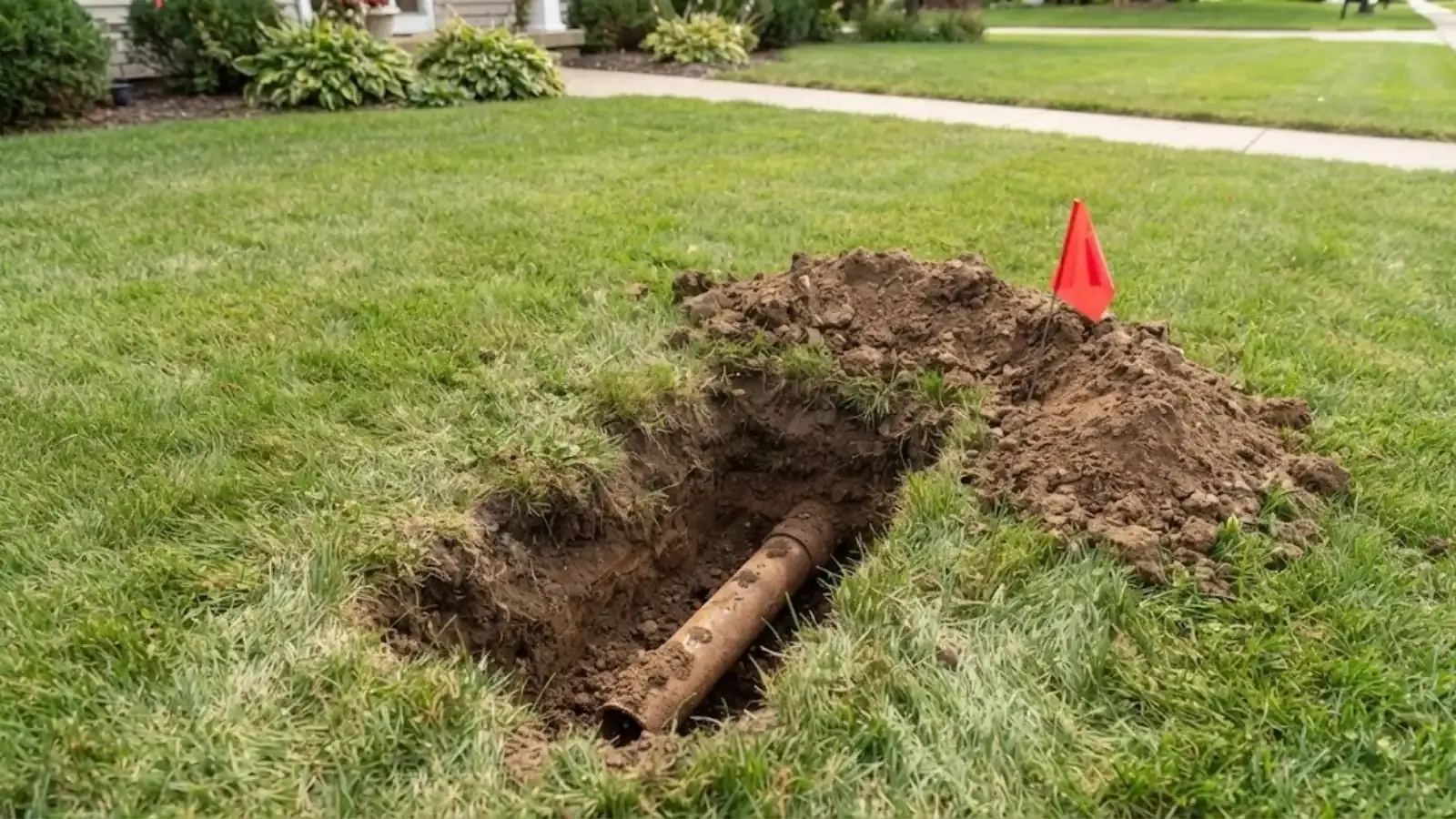
A cleanout is a capped pipe that gives direct access to the sewer line. Look outside near the house foundation, along the side yard, or near the property line, and inside a garage or utility area if the outside search comes up empty. The cap is often round, threaded and a few inches wide.
Knowing where it sits saves time, since a plumber can run a cable or a camera straight into the line instead of removing a toilet. Do not open it when water is already backed up inside, because wastewater can rise out of the pipe under pressure. If the cap is stuck or you see liquid at the top, leave it closed and call.
What to do when sewage is backing up
If sewage is backing up right now.
- Stop running water: no flushing, laundry, dishwasher or showers.
- Keep children and pets out of any backed-up water.
- Do not pour chemical drain openers, since they can burn skin and damage pipes.
- Move rugs and stored boxes away from affected floor drains.
- Call (949) 325-3122 and say which drains are backing up.
Chemical openers are a common mistake. They rarely clear a main line, sit in the pipe and then burn the hands of the plumber who has to open it. A plunger on a single fixture is fine, but it will not help a main line clog.
San Juan Capistrano note: who is responsible for which part of the sewer
Before you pay for a major sewer repair, confirm with the district that serves your address who maintains the line and where the owner's responsibility ends. The part under your yard and the part under the street may belong to different parties, and the answer can change what you owe.
The area also gets only about 13.6 inches of rain a year, so the ground is dry much of the time. Roots tend to head for moisture, and a leaking joint is a steady source of it. That is why roots in a sewer line often mean a gap in the pipe, not just a plant problem.
Source: SJC climate facts and general guidance (confirm sewer ownership with the serving district)
Multiple drains backing up? Call (949) 325-3122 and describe which fixtures are slow or overflowing.
How a plumber clears a main line
A cable machine feeds a coiled steel cable through the cleanout. A cutter head on the end spins and chews through soft blockages and thin roots. For grease and heavy buildup, hydro-jetting sends a high-pressure water stream down the line and scours the pipe wall.
Before or after clearing, a camera shows what the clog really was. If the picture shows a wad of paper or grease, the job is done once the line is clean. If it shows roots entering at a joint, a cracked pipe or a sag where water pools, clearing buys time but does not solve the problem.
That distinction is what separates sewer line cleaning from sewer line repair. Cleaning removes what is in the pipe. Repair fixes the pipe itself.
Roots, bellies and breaks: when clearing is not enough
Roots enter through tiny gaps at joints, then grow into thick masses that catch paper. Cutting them returns the flow, but if the gap stays, the roots return. A recurring clog on a schedule, say every year or two, is the classic sign.
A belly is a low spot in the pipe where water and solids settle. It clogs repeatedly in the same place, and a camera shows a pool of standing water. A break or collapse stops flow completely and may bring soil into the line.
- The same drain clogs again within months of being cleared.
- A camera shows roots at a joint or a pool of standing water.
- Soil, gravel or pipe fragments come up on the cable.
- A damp or sunken area appears in the yard above the line.
- Several cleanings have each helped only for a short time.
Repair or keep clearing: the decision
Keep clearing when the pipe is intact and the clog was a one-time event, like a wad of wipes. Repair when the camera shows a crack, a sag, a separated joint or roots you cannot keep out. Pipe lining, spot repair and full replacement each suit different conditions, and the camera footage is how a plumber picks among them.
Cost factors include the line's length and depth, how accessible the cleanout is, whether a camera is needed, the type of repair, how much digging or restoration follows, and permit requirements. Your insurer may help with sudden damage but usually not wear, so ask. Want your real number? Call (949) 325-3122.
How to keep a main line running
Flush only toilet paper and human waste. Wipes labeled flushable do not break down the way paper does, and grease poured down a kitchen drain cools and coats the pipe wall. Keep trees and large shrubs in mind when planting over a sewer line.
The crew heads out from the Del Obispo Street office, covers Mission Viejo and Rancho Santa Margarita too, and a weekend backup goes through the same 24/7 line. If your home has a recurring clog, ask for a camera look rather than another quick clearing.
Questions readers ask about this topic
A plunger works on a single fixture, but a main line is a different job. Renting a cable machine can injure hands, scratch a pipe or push a clog deeper. If sewage is already backing up, stop using water and call (949) 325-3122.
A camera shows the difference. Roots look like fibrous masses at joints, while grease looks like a hard, pale coating on the pipe wall. A recurring clog in the same spot usually points to roots or a damaged joint.
Ask the district that serves your address who is responsible for the line from the street to your property. For a backup inside your home, call a plumber right away, and ask about ownership after the line is cleared.
Some policies cover sudden backup damage as an added coverage, and many do not. Ask your insurer before you need it, and keep photos if damage occurs.
Yes, when sewage is entering the house. Stop water use, keep people away from the affected area, and call the 24/7 line. Same-day appointments are available when schedules allow.
Done reading and still have water where it should not be? Call now.