
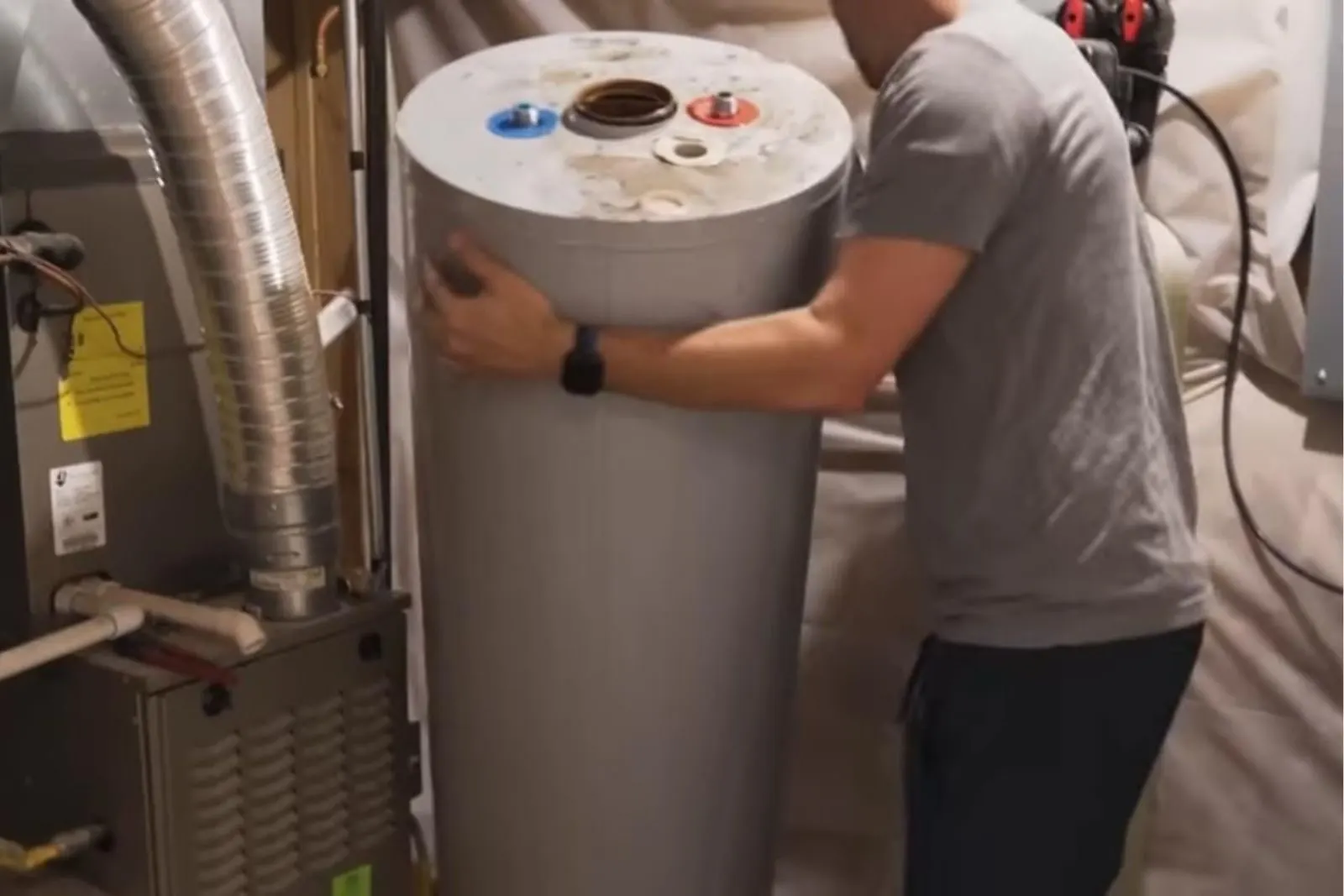
How to Replace a Hot Water Heater in San Juan Capistrano, CA
Replacing a hot water heater comes down to four decisions: size, fuel, venting and the safety parts around the tank. Here is how the job runs, so you can judge any quote that lands on your table.
Water already escaping? Skip the reading and call.
The short version of a heater swap
To replace a hot water heater, a plumber shuts off the water and the fuel, drains the old tank and disconnects it. The new unit goes on a safe base, then water, gas or power and venting are reconnected. The safety parts go on, and the tank is filled and tested. A like-for-like swap usually fits inside one working day. Changing fuel type or moving the heater takes longer because gas lines, vents or wiring change too.
Most of the thinking happens before anyone picks up a wrench. If you want a licensed plumber to handle it, the water heater replacement crew and the installation side of the shop follow the sequence below, and the 24/7 line is (949) 325-3122.
Sizing the tank to the people who use it
Tank size is about how much hot water you draw in your busiest hour, not how many bedrooms you have. Small households often do well with a 40 gallon tank. A 50 gallon suits many families, and big households or deep soaking tubs push toward something larger.
Every new heater carries a first hour rating on its label. That number is the gallons it can deliver in one hour starting with a full tank. Add up what runs at once on a typical morning, such as two showers, the dishwasher and a laundry load, and make sure the rating covers it.
Physical size matters just as much. The new tank has to fit the closet or garage corner and still line up with the existing pipes. Measure the old unit's height, width and distance from the wall before you compare models.
Gas, electric or heat pump: the fuel decision
| Type | What it needs | What to watch |
|---|---|---|
| Gas tank | Gas line and a flue to the outside | Clear flue path and enough air for combustion. |
| Electric tank | Dedicated 240 volt circuit | Breaker and wire sized for the heater, slower recovery. |
| Heat pump electric | Open space, a condensate drain and a suitable circuit | Cools the air around it and needs room to breathe. |
Staying with the fuel you already have is the cheapest and quickest path, because the hookups are in place. Switching fuel means new gas piping, new wiring or a new vent, and each of those is its own piece of work. That is the single biggest reason two quotes for the same tank size can look far apart.
Not sure what size or fuel fits your home? Talk it through with a plumber on the 24/7 line.
The parts that make a new heater safe
The temperature and pressure relief valve, usually called the T&P valve, is the tank's last line of defense. If the water overheats or pressure climbs too high, it opens and vents. Its discharge pipe must run downward to a safe spot and must never be capped or plugged.
An expansion tank is a small cushion on the cold supply line. When water heats, it expands, and a closed system has nowhere to put the extra volume. The pressure spike can wear out fixtures and the heater itself, so ask whether your plumbing needs one.
California requires water heaters to be braced or strapped against earthquake movement. A replacement should come with straps tied into framing, flexible connectors, a shutoff valve within reach and, where a leak could damage a floor, a drain pan. Permit rules vary, so ask the San Juan Capistrano building department what applies to your address.
San Juan Capistrano note: mild weather and a shop on Del Obispo
The city averages about 13.6 inches of rain a year, with a mean daily high near 71 F and a mean daily low near 56 F. Hard freezes are rare, so the water arriving at your heater is not as icy as in colder regions. Sizing charts built for cold climates can overshoot, so ask your plumber how local conditions were considered rather than simply dropping a size.
Crews are dispatched from 31888 Del Obispo Street, with I-5 and Ortega Highway as the main routes out. If the old tank fails after hours, shut the cold supply valve above it and call the 24/7 line. Same-day appointments are offered when available, so a dead heater does not have to mean days without hot water.
Source: city climate figures, business address and dispatch routes
What the replacement day looks like
- STEP 01
Walkthrough and shutoff.
The plumber checks the location, vent path, gas or electric supply and water pressure. Then the water and fuel go off and the hot taps are opened to let air in.
- STEP 02
Drain and disconnect.
The old tank is drained through a hose to a safe spot. Supply lines, gas or wiring and the vent are disconnected, and the tank is moved out.
- STEP 03
Set and connect.
The new tank goes on a level base. Water lines, the T&P valve and its discharge pipe, the expansion tank, the gas connection or wiring, and the vent are installed.
- STEP 04
Strap and fill.
Seismic straps go on, the tank is filled with the hot tap open until air is gone, and every joint is checked for weeping.
- STEP 05
Light, test and explain.
The burner or elements are started, the vent draft and temperature setting are checked, and you get shown the shutoff valves and the relief valve.
Questions to ask before you approve a quote
- Does the quote name the tank size and the first hour rating?
- Is the expansion tank, the T&P discharge pipe and strapping included?
- Will the old vent be reused, and has someone looked at its condition?
- Who removes the old tank and handles any permit steps?
- Is the price clear before work starts, with any extra work named?
Cost factors are fairly predictable even without a number. Fuel switches, vent or gas line changes, tight access, bigger tanks and code upgrades such as an expansion tank all add labor or parts. Want your real number? Call (949) 325-3122.
Repair or replace when it limps along
Tank heaters tend to last roughly a decade. Rusty hot water, rumbling noises, damp metal at the base and repeated pilot or element trouble all point toward the end. Water pooling under the tank means shut off the supply and call (949) 325-3122 to plan the swap soon.
The same steps apply for neighbors in Dana Point, where salt air near the coast can corrode exposed fittings and make a vent or connector worth replacing alongside the tank. They apply in Mission Viejo too, where the real question is usually fit and fuel.
Questions readers ask about this topic
A straight swap of the same fuel type and size commonly fits in one working day. Venting changes, a fuel switch or a relocated heater add time, because pipes, gas or wiring have to be altered first.
Ask the plumber what the day involves for your setup when you get the quote.
Not always, but the vent must be checked. Rust, gaps, poor slope or a different tank diameter can make the old vent unsafe to reuse. A plumber should look at it before agreeing to keep it.
Often yes, if it fits the space and the connections. Remember that a bigger tank costs more to keep hot, so match it to your busiest hour instead of buying extra capacity just in case.
It depends on whether your plumbing is a closed system, for example with a check valve or pressure regulator on the supply. A plumber can test it. If thermal expansion has nowhere to go, the tank prevents pressure spikes.
Yes. California requires water heaters to be braced or strapped against earthquake movement. Straps should be anchored to framing, not just wrapped around the tank, and the gas or water connections should be flexible.
Done reading and still have water where it should not be? Call now.