
Homemade Water Filtration System in San Juan Capistrano, CA
A homemade sand and charcoal filter can catch dirt, but it cannot make unsafe water safe to drink. Here is what these projects do, what they miss, and what makes sense for a home on city water.
Water already escaping? Skip the reading and call.
The honest answer about homemade filters
A homemade filter built from sand, gravel and charcoal is not a safe way to make drinking water. It strains out visible dirt and some sediment, and that is all. It does not reliably remove bacteria, viruses, parasites, dissolved chemicals or metals, and a clear glass of water can still make you sick.
That does not make the project worthless. It is a fine classroom demonstration and a useful pre-strainer for non-drinking water. It just must not be treated as a treatment system, and nobody should drink from it. If you want a real treatment setup instead, call (949) 325-3122.
How the layers work, and what each one catches
The classic build uses a cut bottle or bucket filled in layers: cloth or coffee filter at the bottom, then charcoal, fine sand, coarse sand and gravel on top. Water trickles down through each layer, and each layer traps a different size of particle.
| Layer | What it does | What it misses |
|---|---|---|
| Gravel | Catches leaves and large debris | Anything smaller than the gaps. |
| Coarse and fine sand | Traps silt and cloudiness | Germs, which are far smaller than sand gaps. |
| Charcoal | May reduce some odor and color | Most dissolved chemicals, unless it is proper activated carbon and sized for the job. |
| Cloth or filter paper | Stops loose grains from escaping | Everything else. |
Homemade charcoal from a fire pit is not the same as activated carbon made for treatment. Ash, dust and unburned residue can leave the water worse than it started. Even store-bought carbon only helps with certain tastes and chemicals, not with germs.
Where a homemade filter still earns its place
These builds teach how particles separate by size, and kids learn from them. They can also clear mud from rainwater collected for watering plants, or pre-strain water before it goes into a proper treatment step. They are not a substitute for that step.
- A school or home science demonstration, with the output labeled not for drinking.
- Cleaning silty water that will irrigate plants.
- Removing grit from a bucket of rinse water for tools.
- Learning how layered media works before buying a real system.
- Camping practice with the understanding that you must still boil or treat it.
In an emergency, the safest route is to follow instructions from your water district or local health officials. If they advise boiling, a rolling boil of clear water is the standard step. Filter first only to remove cloudiness, then boil.
Your tap water is already treated
San Juan Capistrano drinking water comes through Santa Margarita Water District, and it is tested and treated before it reaches your house. The district's 2026 Water Quality Report covers the 2025 reporting year. It exists so you can see what is in your supply instead of guessing.
A homemade filter adds a risk here. A bucket of damp sand and charcoal is a good place for bacteria to grow, and it can contaminate water that was safe going in. If you worry about what is in your tap, read the report, or call the district, and test the water rather than building a filter.
Skip the bucket experiment. Call us to match the right treatment to your tap.
Hardness is a different problem
SMWD's report lists average total hardness in 2025 at 210 milligrams per liter as calcium carbonate, or 12 grains per gallon. The range across the system ran from 89 to 290 milligrams per liter, which is 5.2 to 17 grains. That is hard water, though the value depends on where your home sits in the system.
Hardness is dissolved calcium and magnesium. Sand and charcoal do nothing about it. It shows up as spots on glass, scale on heater elements and tank bottoms, and crust on showerheads. Only a softener, or similar scale control, treats it.
San Juan Capistrano note: where your tap water comes from
SMWD took over San Juan Capistrano's water service on November 15, 2021. Its water comes from three sources: local groundwater treated at the San Juan Groundwater Plant, water purchased from Irvine Ranch Water District, and water purchased from the Metropolitan Water District of Southern California. That mix may be one reason hardness varies from home to home.
The Irvine Ranch supply is treated at the Baker Water Treatment Plant, and the Metropolitan supply is imported from the Colorado River and the State Water Project. Because the sources change, test your own tap or read the report before you buy equipment. The same advice applies in nearby Laguna Niguel, though the supplier there is different, and in San Clemente, where part of the community is served by SMWD.
Source: SMWD 2026 Water Quality Report
Filter, softener or neither: sorting out what you need
| Your concern | What helps | What does not |
|---|---|---|
| Chlorine taste or odor | A carbon filter on the drinking tap | A sand filter. |
| Spots, scale and heater buildup | A water softener | A carbon filter alone. |
| Cloudy water after a main break | Letting sediment settle and following district advice | A bucket filter. |
| Concern about specific contaminants | Reading the water quality report and testing | Any homemade setup. |
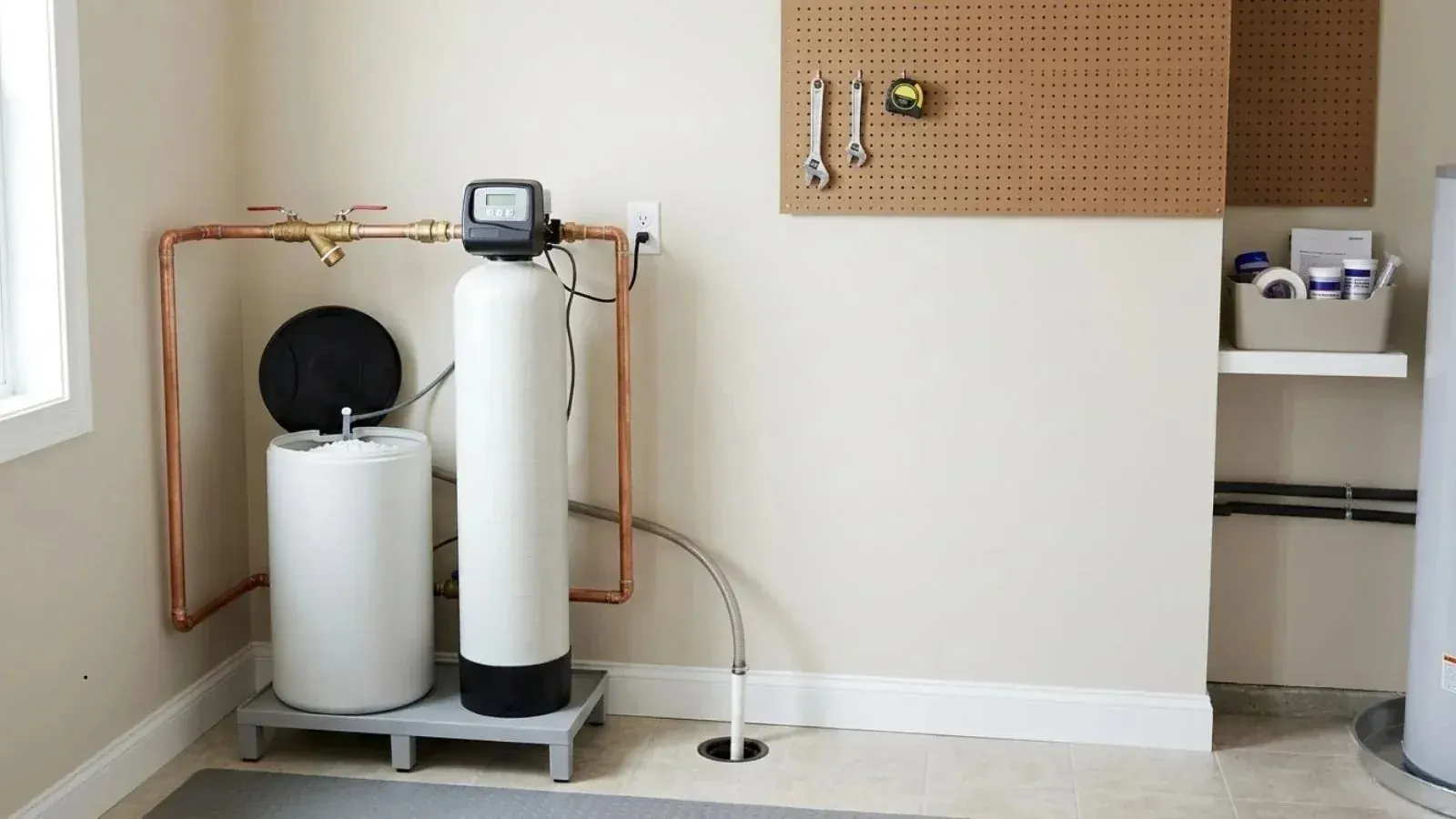
Our water softener and filtration service can match a tool to the concern you actually have. Many homes need only a drinking-water filter at the kitchen tap, while others need whole-house scale control. If you plan to add a new line, valve or system, our plumbing installation team can set it up.
What a proper system costs to plan for
A real system depends on the type, the size of the home and the water quality in your area. Whole-house softeners need a drain and power. A tap filter is simpler, but its cartridges need regular replacement. A clear price comes before work starts, and you can reach us at (949) 325-3122 to talk it through.
Hidden costs matter too. Replacement cartridges, salt for a softener, and the water used to regenerate are ongoing expenses. A smaller unit may be enough if you only filter drinking water. Ask about those before you decide.
What to do before building anything
- STEP 01
Name the worry.
Is it taste, spots, cloudiness or a health concern? Each needs a different answer.
- STEP 02
Read the report.
The district's water quality report lists what was found in your supply and how it compares to limits.
- STEP 03
Test the tap if in doubt.
A certified lab can test for specific contaminants in your home's water.
- STEP 04
Pick a tool that fits.
Select a carbon filter for taste or a softener for scale, and avoid DIY for drinking.
- STEP 05
Ask a plumber.
A plumber can check your pressure, valves and layout before a system goes in.
Questions readers ask about this topic
Boiling kills most germs, but the filter itself can add dust, ash or residue, and it does not remove dissolved chemicals. In a true emergency, filter for cloudiness and then boil. For everyday drinking, use treated tap water instead.
A standard carbon pitcher improves taste and odor but does not reduce hardness. Scale control needs a softener or a similar scale-treatment system. Read the product label to see what it claims.
SMWD treats and tests the water and publishes the results each year in its water quality report. Read the 2026 report for the 2025 data. If you have a specific concern, ask the district directly.
A softener swaps hardness minerals for sodium or potassium so scale does not build. A filter strains particles or adsorbs certain chemicals. They solve different problems, and some homes use both.
Yes, undersink filters are a common job and often simple. A plumber checks the cold line, fits a small valve and confirms the cartridge is properly seated. Call (949) 325-3122 if you want help choosing where it goes.
Done reading and still have water where it should not be? Call now.