
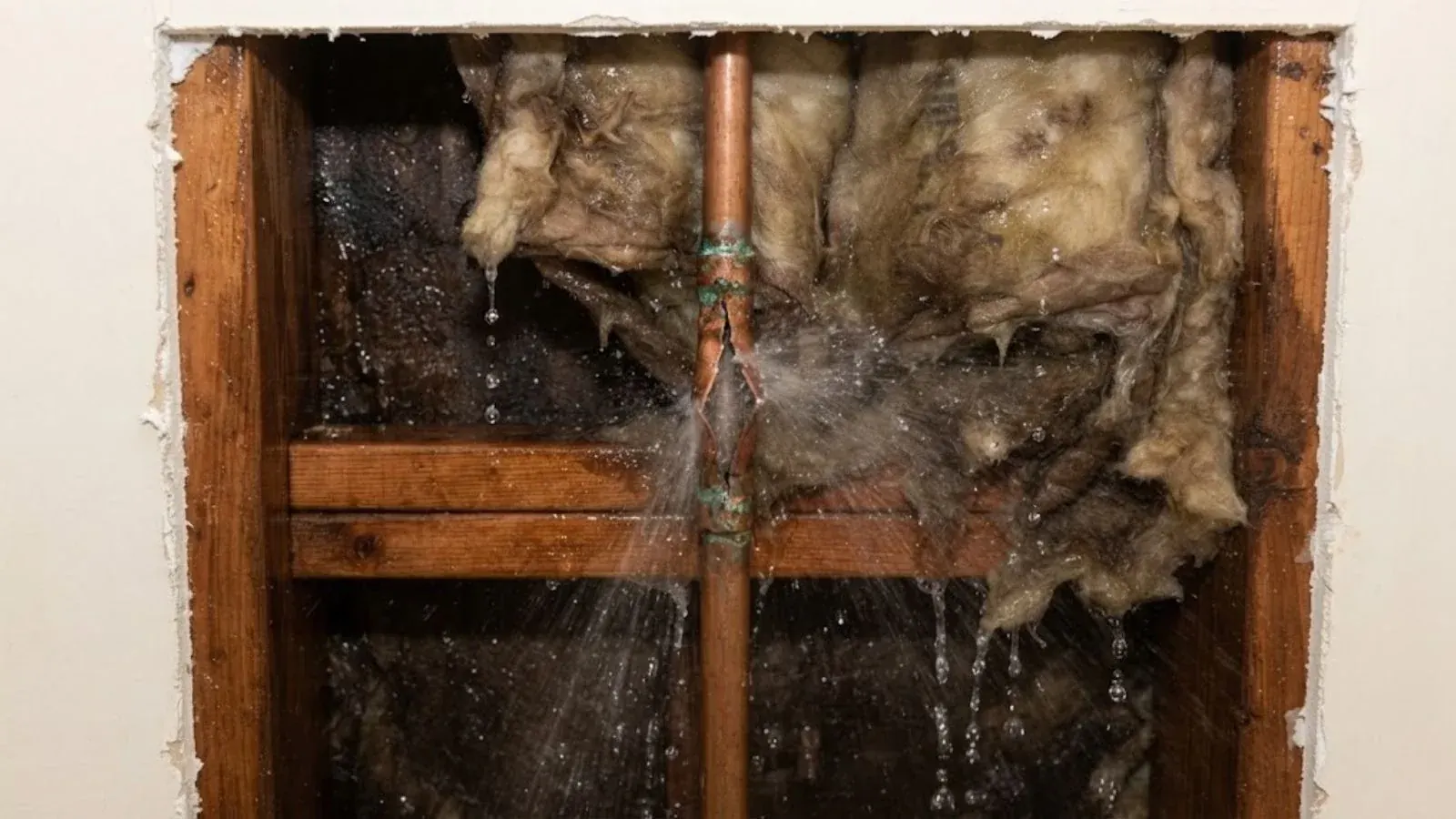
High Water Bill? Find a Hidden Leak in San Juan Capistrano
A jump on the bill with no change in how you live usually means water is going somewhere you cannot see. Your meter can tell you in about fifteen minutes whether that is true.
Water already escaping? Skip the reading and call.
The quick answer: your meter does not lie
If your bill jumped and nobody changed their habits, check the water meter before you assume the bill is wrong. Turn off every tap and appliance, then watch the small leak indicator on the meter face. If it keeps moving, water is leaving your pipes somewhere, and you have a leak to find.
If the indicator holds perfectly still, the leak is not on the house side of the meter, and the bill needs a different kind of attention. The rest of this guide shows you how to run the test, how to read what you see, and who to call for each result.
Finding and reading the meter
Most homes have the meter in a small in-ground box near the street or the property line, under a lid marked for water. Lift the lid with a screwdriver blade, not your fingers, and brush away any spiders or dirt. If the lid will not budge or you see standing water in the box, stop and note it for later.
Look at the face. You will usually see a row of numbers like a car odometer, a sweeping hand or small dial, and a tiny triangle or star that spins when any water moves. That small wheel is your leak indicator, and it reacts to flows far too small to hear. The units are printed on the face, and your district can tell you how they map to the bill.
The 15 minute leak test
- STEP 01
Make the house quiet.
Close every faucet and shower. Make sure the dishwasher, washing machine and ice maker are idle. Ask everyone not to flush.
- STEP 02
Write down the reading.
Note the full number on the meter face and where the small indicator sits. A phone photo works well and gives you proof later.
- STEP 03
Wait fifteen minutes.
Stay away from every fixture during this time. Do not run irrigation, either. A timer that fires halfway through will ruin the test.
- STEP 04
Read it again.
If the odometer numbers moved, you have a continuous leak. If only the small indicator crept around, the leak is small but real.
- STEP 05
Split the system in two.
Close the main shutoff valve at the house and check the meter once more. If it stops, the leak is inside the home. If it keeps running, the leak is in the line between the meter and the house.
If the meter will not stop moving, call us and we will help you track the leak down.
What the meter is telling you
The pattern matters as much as the movement. A fast spin means a big, obvious break. A slow creep points to something quieter, like a pinhole or a slowly failing seal.
| What you see | Likely meaning | Sensible next step |
|---|---|---|
| Indicator still, all water off | No leak on your side of the meter | Compare bills over several months and ask the district about the billing. |
| Indicator moves, stops when main valve is closed | Leak inside the house or at an indoor appliance | Check toilets, water heater area and under sinks, then call a plumber if nothing shows. |
| Indicator keeps moving with the main valve closed | Leak in the buried line from the meter to the house | Call a leak detection plumber, since the pipe is underground. |
| Indicator moves only while the irrigation runs | Broken head, valve or sprinkler line | Check each zone, then repair or replace the faulty part. |
| Moves only at certain hours | Timed device such as irrigation, softener or a filling system | Match the movement to the schedule on your timers. |
San Juan Capistrano note: who handles the bill and why yards matter
Santa Margarita Water District took over San Juan Capistrano's water service on November 15, 2021. For billing questions, readings or account history, SMWD Customer Care is the number to call: 949-459-6420. A plumber can fix a leak, but only the district can explain what it read and when.
The city sees about 13.6 inches of rain a year, so much of what a yard drinks comes from the meter, not the sky. That means a stuck irrigation valve can look exactly like a hidden pipe leak on your bill. Run the 15 minute test with the sprinkler timer off before you decide it is underground.
Source: SMWD service takeover and Customer Care contact, city climate facts
Where hidden leaks actually hide
Once the meter confirms water is moving, work from the easy suspects toward the hard ones. Many homeowners find the cause in the first five minutes.
- A toilet that refills by itself a few times an hour, even when the bowl looks fine.
- Warm or damp spots on a floor, which can point to a hot water line leaking under the slab.
- A water heater with moisture around the base or a relief valve line that drips.
- Faint hissing from a wall when the house is silent.
- Lawn patches that stay green or soggy when the rest of the yard is dry.
- A meter that moves at night when nobody is awake.
To check a toilet, add a few drops of food coloring to the tank and wait twenty minutes without flushing. If color reaches the bowl, the flapper is leaking into it. That is a cheap part and a quick fix, and it is the single most common cause of a silent high bill.
Underground leaks are different. They can run for weeks with no wet spot at the surface, so the bill is often the first sign. Our leak detection work uses listening gear and pressure checks to pinpoint the break before anyone digs.
Who to call, and for what
Split your problem in two. If the meter moves with everything off, you need a plumber. If the meter is still and the bill looks wrong, that is a conversation with the water district about readings, rates and billing history.
For a plumber, describe what the test showed: which valves you closed and what the meter did. That narrows the search and saves diagnosis time. If the main line is breaking and water is pooling now, close the main valve and call (949) 325-3122 so we can get a crew moving.
Homes in Mission Viejo and Rancho Santa Margarita share the same water district as San Juan Capistrano, so neighbors there can follow this same meter routine. Our crews cover the Mission Viejo area as well as Rancho Santa Margarita.
What drives the cost of finding a leak
We do not quote dollar amounts in a guide, because each leak is different. These factors move the price up or down, and a clear price comes before work starts. Call (949) 325-3122 and describe your situation for a plain answer.
- Whether the leak is inside the home or buried between the meter and the house.
- How deep the pipe is and what surface sits on top, such as soil, concrete or tile.
- Whether you need only location work or repair too.
- How many suspect lines and fixtures must be isolated.
- Access to walls, crawl spaces or the slab.
Many homeowners policies cover sudden accidental water damage but not the wear and tear that caused a slow leak. Ask your insurer, and keep the meter photos you took, since they document when the leak was active.
One more quiet cause
Water softeners that fail to finish a regeneration cycle can run water to drain for hours. If the meter moves on a schedule, check the unit before you chase pipes. Our softener and filtration service covers those valves.
Questions readers ask about this topic
Yes. A flapper that lets water trickle into the bowl can waste a large volume over a month without making any noise. The food coloring test in this guide will show it.
If the color shows up, replace the flapper first. Then watch the next bill.
A slow, steady creep is not normal. Meters register tiny flows, so even a dripping faucet or a leaking toilet valve will turn the indicator. Repeat the test, and if it still moves, find the source before it grows.
Run the meter test first. Movement with everything off points to a plumber. A still meter with a higher bill points to the district's billing and meter reading team.
If you are not sure, call (949) 325-3122 and describe what the meter did, and we will tell you whether it sounds like a plumbing problem.
Hard water leaves scale on valves and heater parts, and scaled parts can stick or seep. It is one reason older flappers and shutoff valves fail to seal. Scale is not the only cause, so the meter test still comes first.
It depends on its size and where it sits. A slab or wall leak can soften materials and feed mold in a matter of weeks. Close the main valve if you hear water moving and cannot find the source.
Done reading and still have water where it should not be? Call now.